July 2026
You could hear the beat of the bass drum and tuba as the horns of the Funky Butt Brass band kicked in and the second line began its May 18, 2026, march up south Broadway from the Broadway Oyster Bar to the legendary BB’s Jazz Blues and Soups (bbsblues.com).
It was a moment of pure joy as the doors, closed since 2023, opened and the band made its way through a cheering crowd toward the stage. On stage were BB’s former partner/manager John May and two of the new owner partners Marquise Knox and Steve Sullivan. They were hosting a special pre-opening event to announce that BBs was back. It was a much-needed sign of hope after some tough years in the St. Louis blues community.
BB's pre-opening event
A decade ago, St. Louis Blues were on a roll. The National Blues Museum (NBM) had opened downtown in 2016. The Big Muddy Blues Festival over Labor Day weekend was an annual event. In 2019 a local band, Hy-C & The Fresh Start Band won the IBC. In a first, Big City Rhythm and Blues magazine, working in collaboration with St. Louis writers, dedicated their entire Dec 1919/Jan 2020 issue to the St. Louis blues scene. Just south of the NBM, next to the St. Louis Cardinals Busch Stadium, the blues triangle on South Broadway, BB’s, Beale on Broadway and the Broadway Oyster Bar, thrived offering live music until 3 AM. Live blues music was also available nearby at Hammerstones, the 1860’s and the Venice Café in the Soulard and Benton Park neighborhoods. KDHX, a community owned station founded by many local blues musicians, was going strong. Life was good until it wasn’t.
The 2020 pandemic brought everything to a halt. Downtown became a ghost town as businesses shifted employees to working at home. Restaurants and entertainment places first closed temporarily, then permanently. The STL Blues Society raised tens of thousands of dollars to help support musicians. The post covid era found venues facing: an aging/diminished blues audience, a declining city population, a reluctance of people to go downtown or to go out for live music especially late at night. Andy Coco, a popular bass player and producer (Dogtown Records), summed it up best: “people lost their muscle memory of going out for live music.”
The 2020-2026 era also marked the passing of many of the city’s greatest black blues performers: Kim Massie, Big George Brock, Jimmy Hinds, Marsha Evans, Roland Johnson, Gus Thornton, and Gene Jackson. Key blues venues also closed Beale on Broadway, BBs, the Harlem Tap Room (2025 tornado), and the National Blues Museum (2026). The last Big Muddy Blues Festival was held in 2019. And the community owned KDHX came to a bitter end in 2025 when bankruptcy judge approved its sale to a Christian network.
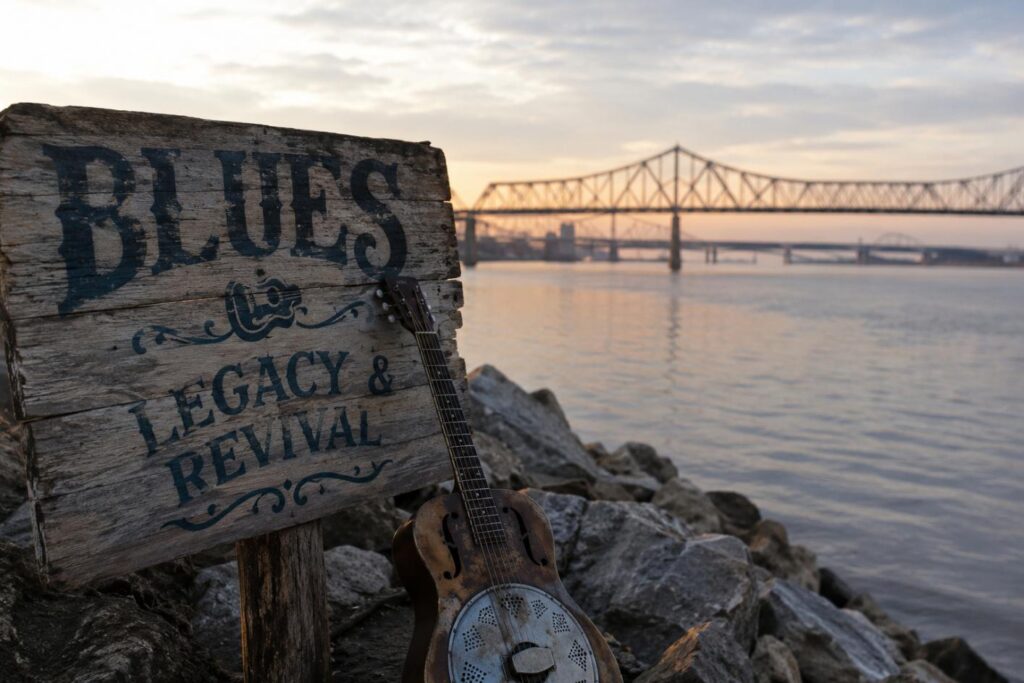
St. Louis has been here before. The 1970’s blues revival was led by black and white musicians, club owners and fans that broke racial barriers and built a community that led to BB’s, The STL Blues Society, festivals, a radio station and the NBM. Today, despite the challenges, there is hope. There is a new generation of musicians on the rise, a new community radio station, and people who have dedicated their lives and money to supporting live music and blues culture.
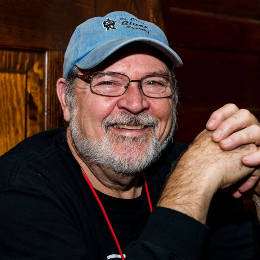
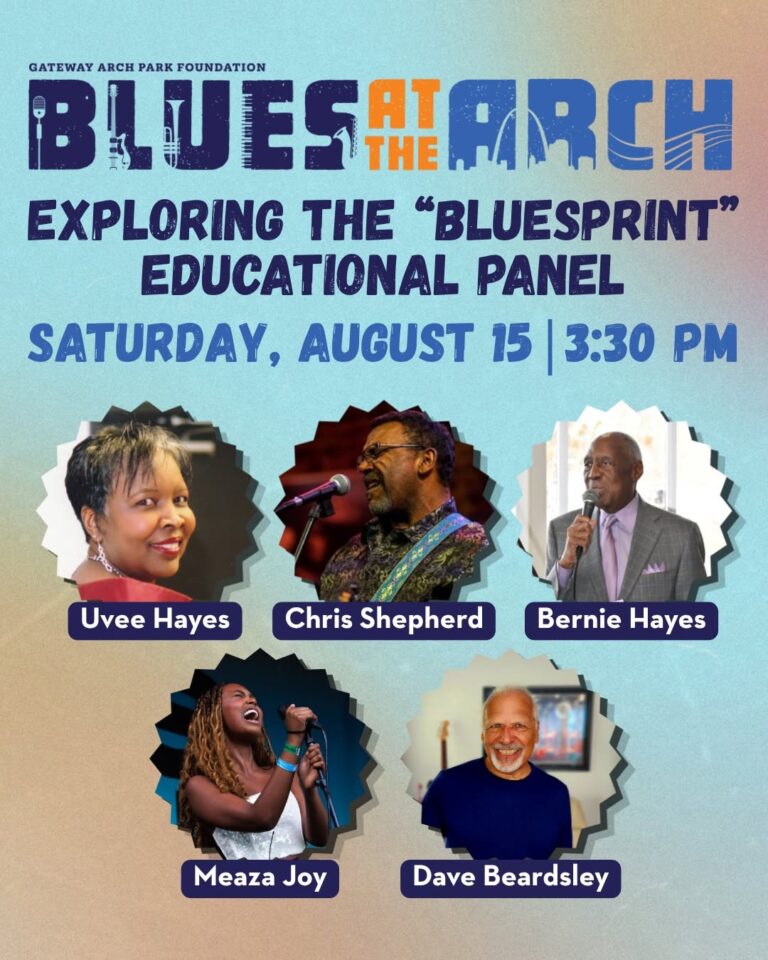
Dave Beardsley is one of those people. “I have always been deeply passionate about blues music and the culture; it’s who I am,” he said. That passion led him to create STLBlues.net in 2000, one of the first blues websites, which earned a 2008 Keeping the Blues Alive award from the Blues Foundation. The site’s open calendar, profiles, and contact information over at his STLBluestalent.net site receives thousands of hits each day. Beardsley has continued expanding his reach with new stories and links on Facebook, Instagram, a YouTube channel @STLBluesnet, and, most recently, BluesForever.org. The latter aims to preserve the energy of the NBM Jam Band because, as Beardsley put it, “we needed closure for all the people the museum engaged in performance. This is preservation through performance.” Two standing-room-only reunions have already brought together more than 40 NBM jam musicians.
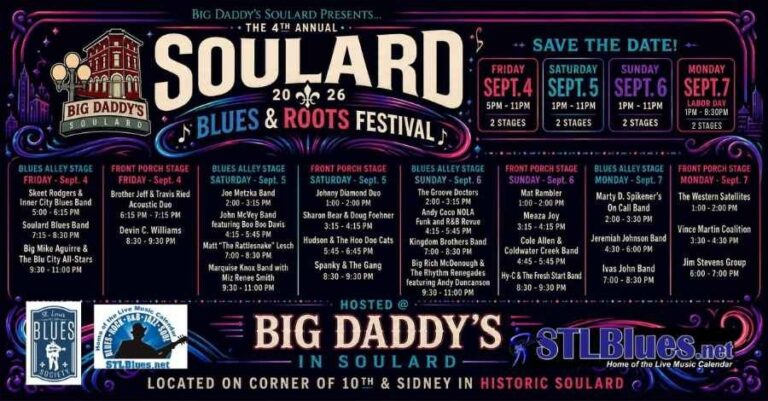
Another source of inspiration is the multi-talented BMA award winner Paul Niehaus IV and his Blue Lotus Studios. Blues Blast award winners, vocalist Dylan Triplett and guitarist Matt “The Rattlesnake” Lesch, have both recorded there. Cole Allen, an impressive guitar talent, was inspired to play blues by his college roommate Matt Lesch. He and his Coldwater Creek Band just recorded their first album, My Love is Real, there. Niehaus has also been busy recording himself with three albums in four years: If I Stay Too Long, Short Story Long, and Cheap Guitar. He also recommends people keep an eye out for Marissa Menendez, a Cuban American vocalist. Other St. Louis artists to watch out for include: Meaza Joy, a 16-year-old who has opened for Samantha Fish just signed with Blind Pig Records, Devin C Williams, a one-man band of Delta style blues who took 2nd place at the 2026 IBC, The Ivas John Band, a talented fun to watch pianist/vocalist Alexandra Sinclair, and Chris Shepherd, singer/guitarist with the Kingdom Brothers. John May also gave a shout out to these Jazz/Funk/soul artists: Kasimu Taylor – trumpet, Scooter Brown – sax, and keyboardist Dave Grelle and The Playadors.
The 2023 firing of longtime volunteer DJs at KDHX unleashed a firestorm that pitted station volunteers, listeners and contributors against an insular board and executive director. Listeners voted with their wallets by shifting their donations to groups opposed to the sale. Hundreds of businesses joined the opposition. The League of Volunteer Enthusiasts (LOVE) raised over $800,000. After the bankruptcy sale LOVE decided to build a new organization, Community Radio St. Louis (CRSTL.fm). Legal fees had taken a chunk, but the group still had over $500k left to build a new station. Kristin Gleisch, Secretary of the CRSTL board summed up their approach: “We are building upon the lessons learned from KDHX. We need to practice mindfulness, take our time, ensure all voices are heard, encourage and support volunteers, keep the community engaged and seek new voices for broadcast.” The new station and studios went live in February. It is easy to find on the Radio Cult (free app) streaming platform. With 80 DJs, (60% former KDHX) this 24/7 platform offers an astonishing mix of genres with blues being a core strength. CRSTL like BB’s reopening has been a real sign of hope.
Seeing St. Louis’s premiere young black bluesman, Marquise Knox, standing on BB’s stage with John May and the Broadway Oyster Bar’s (BOB) Steve Sullivan, brought history full circle. Knox had made his jaw dropping debut at the age of 14 on BB’s stage. May had helped lead the earlier blues revival as a bass player, club owner and a founder of the STL Blues Society. Sullivan and his business partner, Mark Goldenberg, bought BOB in 2019. The club was famous for its New Orleans style cuisine and live music including, “The Longest Running Blues Jam Session in the Nation” hosted by Art Dwyer and the Soulard Blues Band. They all believed in its blues music, its legacy and its future in St. Louis. May and Sullivan gave Knox full credit for making the moment happen.
When May had to close BB’s, Knox mourned the loss. “It’s not a club; it’s a living, breathing institution,” he said. Determined to keep its legacy alive, he began looking for a way forward. May agreed, “We talked regularly about options, and he brought funders together several times, but it didn’t work out.” Then it did. What began as a casual conversation between Knox and Sullivan about blues and St. Louis became a discussion about legacy and vision. Knox, a blues-in-the-schools advocate who has worked to encourage young Black musicians, wanted BB’s to remain “a place for true blues players to play” and to use its stage to educate and inspire a new generation of blues musicians. Sullivan shared that vision and saw BB’s as a natural complement to BOB. “There is power in having the blues triangle on Broadway, and all the new investment going into the downtown waterfront is a long-term opportunity,” he said. That conversation quickly led to a discussion and deal with May and his business partner, Mike Ermer. Having black ownership in this legacy blues club with Knox as partner made an important statement. He will draw upon his blues music connections to help schedule talent and head up their education initiatives.
The reopening of BB’s is scheduled for September. Their announcement said it all: “Plans are underway to bring back BB’s as a space where local jazz, blues and gospel artists will perform, interspersed with talent from across the country.”
Sullivan will draw upon BOB’s own culinary strength in shaping a new soul and southern cuisine menu. BB’s tale, like the others in this article, is a blues story of decline and revival. This tough old industrial city mourns it losses while looking ahead with vision, persistence and people who won’t give up on the things that they love.
Music Journalist Bob Baugh